What draws you to the Hollywood Hills might be the glittering views, but what keeps you looking is the architecture. From glass-and-steel icons to romantic stucco estates, the Hills are a living gallery of design that rewards a closer read. If you love architecture or you are buying with a designer’s eye, you will learn how to spot signature styles, where to appreciate landmark homes from public vantage points, and what to evaluate before you write an offer. Let’s dive in.
What makes Hollywood Hills architecture unique
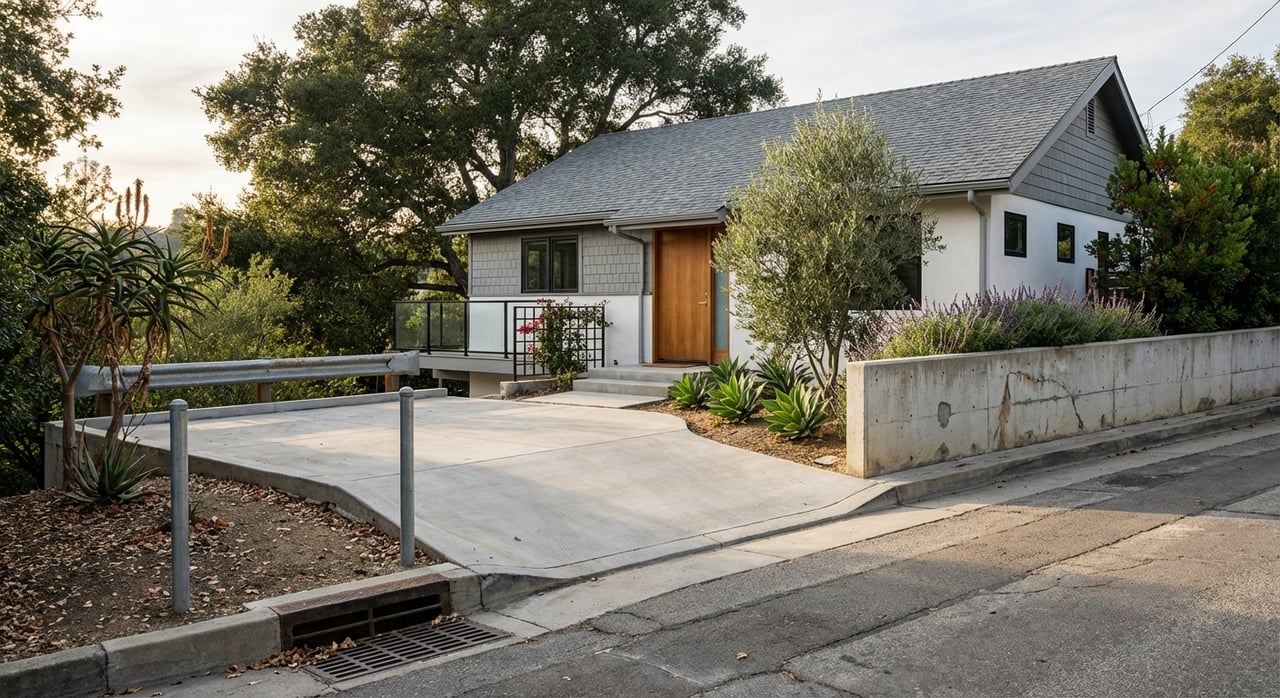
The Hollywood Hills rise above Hollywood and the Sunset Strip, with steep, canyon-carved streets that shape how homes sit on their lots. Builders use switchback drives, terraces, and retaining walls to create access and livable outdoor spaces. Orientation to the slope and the view is everything, so many downslope facades open with wide glass to capture city and sunset panoramas.
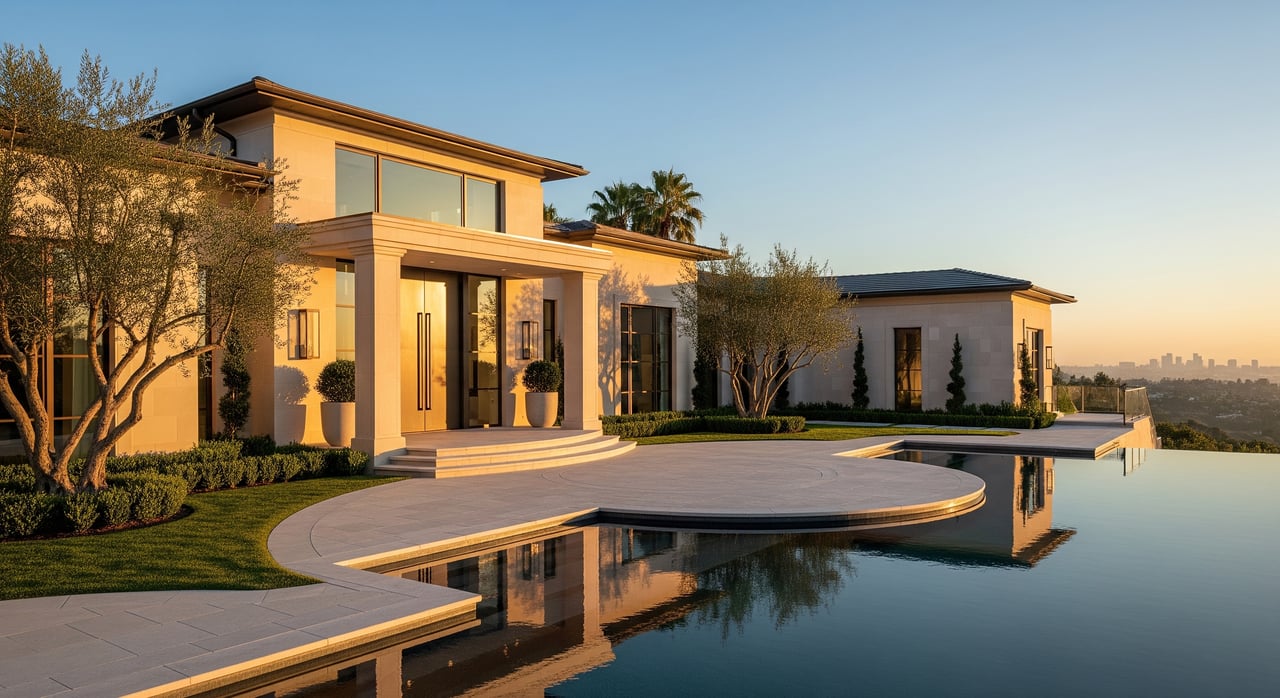
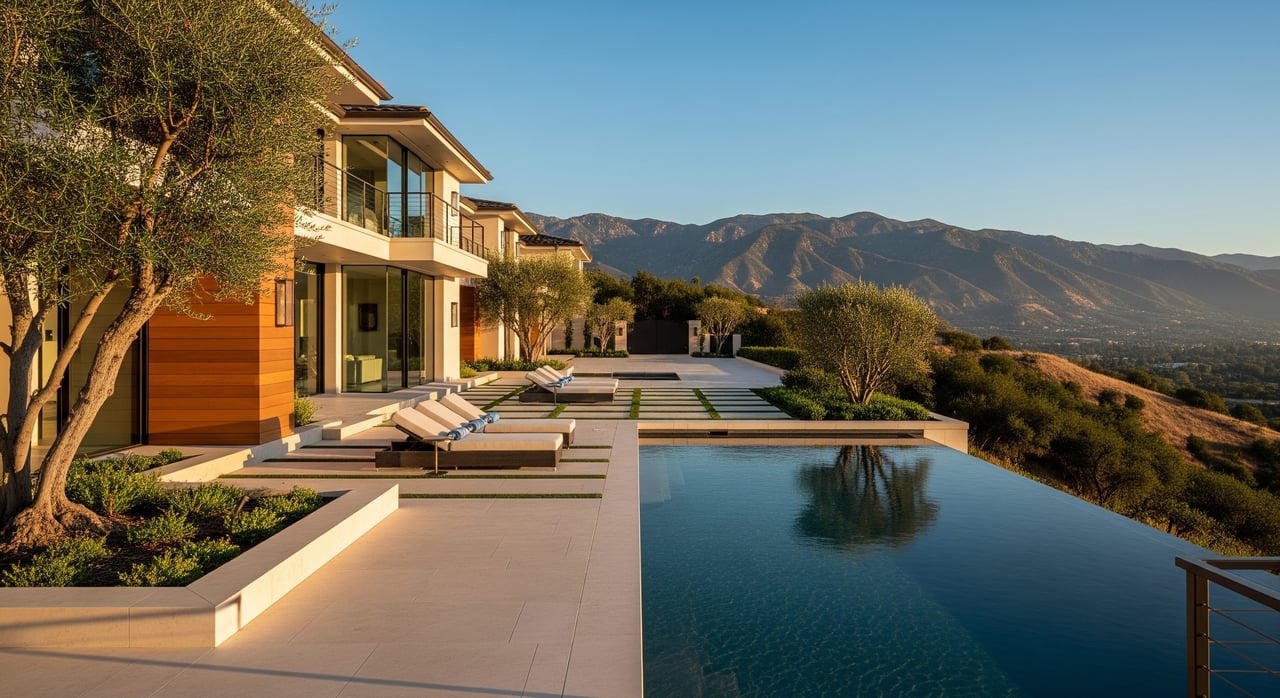
Indoor and outdoor life blends together here. Terraces, pools, and sliding walls of glass make living rooms feel like open-air lounges. Materials tell a story too. You will see the clean lines of steel, glass, and concrete alongside the textured warmth of stucco, red tile, and wrought iron.
The signature styles you will see
Mid-century modern
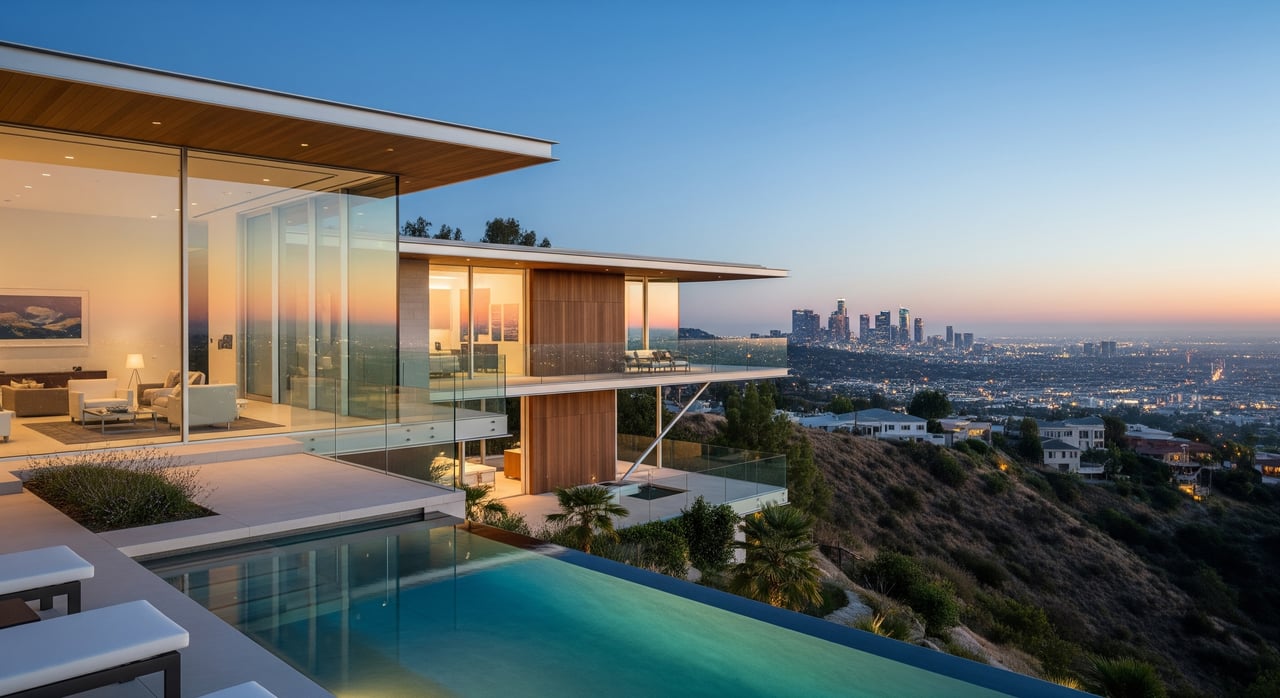
These homes favor open plans, minimal ornament, and thin rooflines that seem to float. Large glass walls and cantilevers pull views into everyday life. Many were designed during the 1940s to 1960s and helped define Southern California modernism.
Buyer notes: Original systems can need seismic and energy upgrades. Glass-heavy facades require careful weatherproofing and thoughtful privacy solutions.
Hollywood Regency
Think theatrical interiors and bold trim that channel classic Hollywood glamour. Exteriors may read as classically proportioned or Mediterranean influenced. These homes often shine through mirrored surfaces, dramatic staircases, and statement rooms.
Buyer notes: Interiors tend to be the star. Expect varying levels of modernization behind the style.
Spanish Colonial and Mediterranean Revival
Stucco walls, red tile roofs, arched openings, and inner courtyards define the “Old California” feel. Ironwork, timber doors, and ornamental tile add character. Many early estates in the Hills follow these models and remain perennially popular.
Buyer notes: Look for sensitive renovations that preserve original detailing while upgrading systems.
Contemporary hillside architecture
From the 1990s to today, you will find sculptural volumes in steel and concrete, smart-home tech, and multi-level plans that step with the slope. Expanses of glazing frame the skyline while energy, water, and landscape performance improve with modern materials.
Buyer notes: Expect high-design finishes and complex engineering. Verify permits for grading, retaining structures, and additions.
Craftsman and bungalow remnants
Pockets of smaller cottages live on, especially in places like Beachwood Canyon and parts of Laurel Canyon. They hint at early 20th-century development before the Hills shifted fully to luxury.
Buyer notes: Scale can be cozy and charming. Confirm expansion potential within current regulations.
Two canonical homes to know
Stahl House (Case Study House No. 22)
Built by Pierre Koenig in 1960, this steel-and-glass home floats above the city and became an icon through Julius Shulman’s photography. It captures the essence of Los Angeles modernism: efficient structure, panoramic glazing, and seamless indoor–outdoor life. If you view it from public streets, do so quietly and respectfully. The home is private property.
Chemosphere
John Lautner’s 1960 octagonal “spaceship” sits on a central column that solves an extreme slope. It is a masterclass in engineering for hillside conditions and a symbol of the Hills’ daring spirit. Like many landmarks here, it is best appreciated from limited public vantage points. Keep a respectful distance and honor neighborhood privacy.
A short, respectful viewing primer
- Choose public overlooks and wider streets, including scenic pull-offs along Mulholland Drive.
- Avoid blocking driveways and keep noise low. Many landmarks are private and gated.
- Bring a camera with a long lens instead of getting close. Preserve residents’ privacy while enjoying the architecture.
Buying with a designer’s eye: what to evaluate
Site, access, and livability
- Driveway grade and street width. Steep drives and limited parking are common.
- View planes. Understand current view corridors and whether nearby development could impact them.
- Daylight and heat. Large glass can increase solar gain, so review shading and glazing performance.
Structure and geology
- Slope stability and drainage. Hillside lots often need geotechnical evaluation to address erosion and landslides.
- Seismic resilience. Older structures may require foundation work and bracing.
- Retaining walls and grading. Confirm condition, permits, and as‑built documentation.
Regulations and overlays
- City approvals. Significant hillside work requires grading and building permits through Los Angeles agencies.
- Scenic protections. Portions of the Mulholland corridor limit visible alterations.
- Fire safety. Canyon and chaparral areas trigger brush clearance and defensible space requirements.
Maintenance and operating costs
- Glass cleaning, drainage management, and slope landscaping can be ongoing cost centers.
- Insurance. Premiums can reflect wildfire exposure and access constraints.
Renovation short-list: 6 essential inspections
- Geotechnical study, to evaluate soils, slope stability, and drainage paths.
- Structural assessment, including foundations, diaphragms, and any cantilevered elements.
- Roof and site drainage, to manage runoff and protect retaining walls and slopes.
- Electrical capacity, especially in mid-century homes upgraded over time.
- Glass and thermal performance, including seals, coatings, and shading strategies.
- HVAC and ventilation, right-sized for large glazing and multi-level floor plates.
Preservation or rebuild: choosing your path
Architecturally significant homes can be listed as local landmarks or covered by conservation agreements, which guide exterior changes. The upside is cultural value and long-term desirability. The tradeoff is added review for alterations and potential limits on demolition or expansion.
If you are considering a rebuild on a steep lot, expect higher costs for grading, structural engineering, and stormwater control. A careful feasibility study will clarify what is possible within today’s regulations.
Safety and resilience basics for the Hills
- Wildfire readiness. Maintain defensible space, clear brush seasonally, and consider ember-resistant vents and fire-rated materials.
- Seismic priorities. Focus on foundation ties, shear walls, and securing chimneys or heavy masonry.
- Water-wise landscaping. Choose deep-rooted, drought-tolerant plants that help stabilize slopes and reduce irrigation demands.
Quick style ID checklist
- Mid-century modern: Thin rooflines, post-and-beam rhythm, glass walls, and cantilevers.
- Hollywood Regency: Symmetry, bold trim, mirrored surfaces, and dramatic stair halls.
- Spanish/Mediterranean Revival: Stucco, red tile roofs, arched openings, courtyards, and ironwork.
- Contemporary hillside: Sculptural massing, steel and concrete, expansive glazing, multi-level plans.
- Craftsman/bungalow: Low-pitched roofs, exposed rafters, wood detailing, and intimate scale.
Making the Hills home
If you are drawn to the Hollywood Hills, you are buying both a home and a piece of cultural history. The right approach balances aesthetics with geology, engineering, and permitting. With careful due diligence, you can preserve design character while living comfortably and safely on the slope.
Ready to evaluate a home or to position yours as an architectural standout? Partner with a team that blends editorial storytelling with disciplined brokerage execution. Connect with Nicole Reber to walk through options, refine your strategy, and see what is possible. Let’s tell your home’s story — schedule a private consultation.
FAQs
Are historic mid-century houses in the Hollywood Hills protected?
- Some are protected through local landmark status or private conservation, but many remain privately controlled and can be altered, so verify each home’s designation with city cultural resources before planning changes.
Can I add a pool or terrace on a steep Hollywood Hills lot?
- It can be feasible, but you will need geotechnical confirmation and city permits for grading, retaining walls, and stormwater control, which often makes costs higher than flat-lot projects.
What are the biggest risks of buying in the Hollywood Hills?
- Key risks include landslide and erosion, seismic vulnerability, limited access and parking, wildfire exposure, and higher maintenance and insurance costs compared with flat neighborhoods.
How visible are famous Hollywood Hills houses to the public?
- Many are best seen only from specific public streets or overlooks, and most are private and gated, so view from public areas, keep a respectful distance, and do not trespass.
How much do Hollywood Hills houses cost?
- Prices vary widely, from premium-priced cottages to multi-million-dollar landmark or contemporary estates, and the market is luxury oriented, so review recent local sales for current context before bidding.